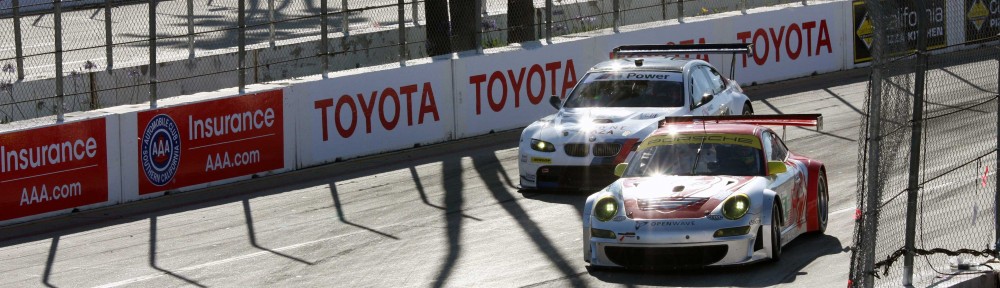
Carrera Cup Deutschland Begins!

Carrera Cup Deutschland kicks off its season tomorrow at Hockenheim with SoCal native Connor De Phillippi behind the wheel of a Porsche 911 GT3 Cup for FÖRCH Racing.  In its 24th season, the Carrera Cup Deutschland runs as part of the prestigious DTM race card for 9 race weekends incorporating 17 races.  This series is also the first career step for Porsche Junior Drivers.  Only the second American to be chosen as a Porsche factory driver, De Phillippi brings a successful karting and single seat racing background to Europe.

Carrera Cup Deutschland Race 1 is tomorrow, May 4 at 8:15 AM PT; Race 2 is Sunday, May 5 at 12:55 AM PT.

Live stream here: Carrera Cup Deutschland Live

Live timing and scoring here: Carrera Cup Deutschland Timing & Scoring

 Carrera Cup Deutschland Schedule

Date Track
May 4, 2013 Hockenheim
May 19, 2013 Nurburgring Nordschleife
June 1, 2013 Spielberg
June 15, 2013 Lausitz Ring
July 13, 2013 Norisring
August 17, 2013 Nurburgring
September 14, 2013 Oschersleben
September 28, 2013 Zandvoort
October 19, 2013 Hockenheim

More info on Drivers, Teams, and the series: Carrera Cup Deutschland

2013 Toyota Grand Prix of Long Beach – IndyCar

Grand Prix of Long Beach

The IZOD IndyCar Series took to the most famous street course in the US for the 39th Grand Prix of Long Beach on a perfect California day.  The IndyCar series comes to the Monaco of North America with some new faces at or near the top of the standings with James Hinchcliffe having won the season opener at St. Petersburg and favorites like Will Power and Dario Franchitti having difficulties in both the opener and the second race at Barber Motorsports Park.

Toyota Grand Prix of Long Beach – Qualifying

An event filled qualifying session left the Target Ganassi racers split with Dario Franchitti on pole and Scott Dixon next to last on the grid due to a penalty.  Second was reigning champion Ryan Hunter-Reay of Andretti Autosport, and third was Team Penske’s Will Power.

The first five rows at the start of the Grand Prix of Long Beach were:

  1. Dario Franchitti
  2. Ryan Hunter-Reay
  3. Will Power
  4. Takuma Sato
  5. Mike Conway
  6. Helio Castroneves
  7. James Hinchcliffe
  8. Tony Kanaan
  9. Charlie Kimball
  10. E.J. Viso

Grand Prix of Long Beach - Dario Franchitti

Toyota Grand Prix of Long Beach – The Race

On lap 1,Tristan Vautier clipped Scott Dixon approaching Turn 5 spinning Dixon, damaging his wing, and flattening his right rear tire.  On the second lap, Sebastian Saavedra brought out a full course caution when he slammed into the wall at the exit of Turn 9 after passing Simona de Silvestro and carrying far too much speed into the turn.  For much of the early part of the race, Franchitti lead from Hunter-Reay, Sato, Power, and Hinchcliffe.  Charlie Kimball and Alex Tagliani tangled going into Turn 7 while drivers were making their first green lap pit stops, bringing out a full course yellow on lap 31.  Kimball was on cold tires and overshot the corner on the inside carrying both cars into the tire barriers on the exit.

The lap 34 restart was messy from the start with the running order Sato, Power, Franchitti, Conway, and Rahal.  James Hinchcliffe had the door to Turn 1 slammed shut by Tony Kanaan bringing out another caution and taking Hinchcliffe out of the race and also damaging E.J. Viso’s car.  Green flag racing resumed on lap 39 with Sato leading from Franchitti, Rahal, Power, and Kanaan.  Will Power struggled mightily throughout the middle part of the race, steadily dropping back into the middle of the pack while Takuma Sato built up a big gap.

On lap 50, Ryan Hunter-Reay carried too much speed into Turn 7 and buried it in the tire barriers bringing out another full course yellow.  During the caution period pit stops, Vautier was released into Power, damaging Power’s right rear, extending his pit stop, and necessitating a second stop as his day went from bad to worse.

With 25 of 80 laps to go at the restart they were running Sato, Rahal, Franchitti, Wilson, and Kanaan with the top four on softer red tires and Kanaan on more durable blacks.  Takuma Sato, who really had the pace all day long, ran easily to victory.  Graham Rahal who also ran a solid race took the second spot on the podium with Justin Wilson climbing from a 24th place start to finish third.

Grand Prix of Long Beach - Takuma Sato

The win at the Grand Prix of Long Beach was Takuma Sato’s first in 52 attempts, and it was the first win for A.J. Foyt Enterprises since July 7, 2002.

Top ten finishers:

Position Driver Car No. Start Laps Led Points
1 Takuma Sato 14 4 50 53
2 Graham Rahal 15 11 40
3 Justin Wilson 19 24 35
4 Dario Franchitti 10 1 27 34
5 JR Hildebrand 4 12 30
6 Oriol Servia 22 18 28
7 Marco Andretti 25 25 26
8 Simon Pagenaud 77 17 24
9 Simona de Silvestro 78 19 22
10 Helio Castroneves 3 6 20

Grand Prix of Long Beach - Graham Rahal

2013 ALMS Long Beach

ALMS Long Beach

The 2013 American Le Mans Series at Long Beach marked the seventh and final ALMS race held as part of the Toyota Grand Prix of Long Beach weekend.  ALMS has been a fantastic addition to the Grand Prix weekend with the open and accessible ALMS paddock and the Saturday afternoon race being fan favorites.  The United SportsCar Racing schedule won’t be released until much later this year, but I cannot imagine a Long Beach Grand Prix weekend without sportscar racing.

ALMS Long Beach

2013 ALMS Long Beach Race Results

Class Position Number Team Drivers Car
P1 1 6 Muscle Milk Pickett Racing Klaus Graf / Lucas Luhr HPD ARX-03a
P1 2 12 Rebellion Racing Nick Heidfeld / Neel Jani Lola B12/60 – Toyota
P1 3 16 Dyson Racing Chris Dyson / Guy Smith Lola B12/60 – Mazda
P2 1 01 Extreme Speed Motorsports Scott Sharp / Guy Cosmo HPD ARX-03b
P2 2 02 Extreme Speed Motorsports Ed Brown / Johannes van Overbeek HPD ARX-03b
P2 3 551 Level 5 Racing Scott Tucker / Ryan Briscoe HPD ARX-03b
PC 1 05 Core Autosport Jonathan Bennett / Colin Braun Oreca FLM09
PC 2 52 PR1/Mathiasen Motorsports Mike Guasch / Luis Diaz Oreca FLM09
PC 3 9 RSR Racing Bruno Junqueira / Duncan Ende Oreca FLM09
GT 1 55 BMW Team RLL Bill Auberlen / Maxime Martin BMW Z4 GTE
GT 2 56 BMW Team RLL Dirk Müller / Joey Hand BMW Z4 GTE
GT 3 91 SRT Motorsports Mark Goossens / Dominik Farnbacher SRT Viper GTS-R
GTC 1 20 NGT Motorsports Henrique Cisneros / Sean Edwards Porsche 911 GT3 Cup
GTC 2 45 Flying Lizard Motorsports Nelson Canache, Jr. / Spencer Pumpelly Porsche 911 GT3 Cup
GTC 3 44 Flying Lizard Motorsports Brian Wong / Dion von Moltke Porsche 911 GT3 Cup

ALMS Long Beach

ALMS Long Beach – The Final Chapter

This Saturday’s Tequila Patrón American Le Mans Series at Long Beach marks the final ALMS Long Beach race before next year’s merger with (takeover by?) Grand-Am as United SportsCar Racing.  Just six years ago in 2007 we saw the last Champ Car race at Long Beach before open wheel racing reunification under the IndyCar brand.  Somewhat ironically, that was also the first year that ALMS came to Long Beach.

ALMS Long Beach

The ALMS scene has changed rather remarkably since 2007.  Back then we had only four classes: LMP1, LMP2, GT1, & GT2.  Although the field of two Corvettes in GT1 pretty much played by themselves, GT2 was very competitive, and the LMP2 cars of Penske, Highcroft, Dyson, and Andretti Green could actually beat the LMP1 Audis on slow, tight courses like Long Beach.  And that’s exactly what happened at ALMS Long Beach in 2007.

ALMS Long Beach 2007 – Prototype Classes

Penske Racing took the top two spots with the #7 LMP2 Porsche RS Spyder driven by Romain Dumas and Timo Bernhard and the #6 driven by Sascha Maassen and Ryan Briscoe.  Dumas and Bernhard would go on to win the LMP2 Drivers Championship that season.  The Dyson Racing #16 RS Spyder driven by Butch Leitzinger and Andy Wallace took the third spot on the podium.  The nearest LMP1 Audi Sport North America R10 TDI came in seventh, piloted by Dindo Capello and Allan McNish, who would go on to win the LMP1 Drivers Championship in 2007.  The other Audi, driven by Emanuele Pirro and Marco Werner, came in ninth.  Pirro and Werner would be joined by Frank Biela to win Le Mans later that year.  Other notable entries in the prototype classes at ALMS Long Beach that year included David Brabham driving for Highcroft Racing, Bryan Herta and Dario Franchitti driving for Andretti Green Racing, and Adrian Fernandez with Lowe’s Fernandez Racing.

ALMS Long Beach 2007 – GT Classes

As mentioned earlier, the GT1 class consisted entirely of the two Corvette Racing cars with the #4 Corvette C6.R driven by Oliver Gavin and Olivier Beretta taking the top spot both at Long Beach and for the season.  GT2 was an entirely different story consisting of two Panoz Esperantes, three Ferrari F430s, and  six Porsche 911 GT3s.  Risi Competizione took first and third with the #62 Ferrari F430 driven by Mika Salo and Jaime Melo on the top spot and the #61 driven by Niclas Jonsson and Anthony Lazzaro taking third.  Again, the winners at ALMS Long Beach, Salo and Melo, would go on to take the Drivers Championship.  Between the two Ferraris were Darren Law and Patrick Long in the #44 Flying Lizard Motorsports Porsche 911.  Wolf Henzler and Robin Liddell drove a 911 to fourth for Tafel Racing.  In fifth was the first of the Panoz Esperantes driven by Bill Auberlen and Joey Hand.  Other interesting GT entries were Tim Bergmeister and Dirk Müller in the Petersen White Lightning Ferrari F430 (6th), Johannes van Overbeek and Jörg Bergmeister in the #45 Flying Lizard 911 (9th), Bryan Sellers in the second Panoz (DNF) and Tommy Milner in the Rahal Letterman Racing Porsche (DNF).

ALMS Long Beach 2013

The world economic collapse and tepid recovery in the intervening years have effected all of motorsports: Honda, Toyota, and BMW left F1; Peugeot left sportscar racing entirely from a position of great competitive strength in the Le Mans prototype class; and both IndyCar and ALMS have been affected by attempted cost containment.

Since 2007, ALMS has grown from four classes to five – adding a prototype spec class (PC), collapsing GT1 and GT2 into GT, and adding the Porsche GT3 Cup spec class (GTC).  P1 is no longer the premier class attracting the Le Mans cars that it was back in 2007.  The Le Mans LMP1 cars now run in the World Endurance Championship sanctioned by the FIA.  Neither can the P2 cars beat the P1 cars any longer.  This year’s ALMS Long Beach prototype field has three P1 cars, four P2 cars, and seven PC cars; back in 2007, there were eight LMP2 cars alone joined by another five LMP1 cars with the top seven prototypes finishing on the lead lap in a really competitive race.  This year’s P1 teams are Muscle Milk Pickett Racing (HPD ARX-03a with HPD engine), Rebellion Racing (Lola B12/60 with Toyota engine), and Dyson Racing (Lola B12/60 with Mazda engine).  P2 has two cars each from Extreme Speed Motorsports (who left GT for P2 since last year) and Level 5 Motorsports.  All P2s are HPD ARX-03bs running HPD engines.

The GT class also looks dramatically different.  And not just compared to 2007; big changes have happened just since last year.  This year’s grid includes two Corvette C6 ZR1s, two Ferrari 458s, two Porsche 911s, two BMW Z4s, and two SRT Vipers.  Corvette Racing are the stalwarts of GT coming off both team and driver championships in 2012.  Risi Competizione returns in one of the Ferraris after a hiatus; they are a real asset to the class and the series.  Flying Lizard Motorsports have left the GT class for the less costly GTC – perhaps to await a new GT3 RSR – after struggling in an aging 911 platform the last two years.  The BMW M3s of Rahal Letterman Racing have been replaced by the Z4s.  Team Falken Tire has picked up the baton as the leading Porsche GT team, while the SRT Vipers have returned to ALMS for a second year after more than a ten-year break.  As mentioned earlier, the popular Extreme Speed Motorsports team traded their Ferrari 458s for P2 cars.

The final ALMS Long Beach race should be competitive across all five classes; I hope the finale is a good one!

The full entry list for ALMS Long Beach 2013 can be found here.

The entire Toyota Grand Prix of Long Beach weekend schedule is here.

Connor De Phillippi – Porsche Junior Driver

Connor De Phillippi Interview

Connor De Phillippi

Connor De Phillippi is smiling. The affable SoCal native recently learned that he earned a spot on the Porsche Junior Team and along with it a Porsche funded scholarship to race in the Carrera Cup Deutschland.  I guess we’d all be smiling with that kind of news.  To say the last year has been eventful for the 20 year old from San Clemente would be a gross understatement.  He went from a very difficult – not of his doing -  sophomore year in Star Mazda to his dream of a racing career in tatters to a spot on the professional ladder of the premier sportscar racing company.  All in the span of a few months.  Soon he will be following in the footsteps of the first and so far only Porsche Factory Driver, Patrick Long, a fellow SoCal racer, who also happens to be his mentor.

Connor and I met for a chat at Avila’s El Ranchito in his native San Clemente.

Chet: How did you get started in motorsports?

Connor De Phillippi: When I was 5, I was living here in San Clemente and some neighbors were driving go karts in a big, open cul de sac area at the bottom of my hill.  My Dad and I stopped by – we were on our way home from somewhere.  They had a little cone circle going on.  Running little 50cc engines, a beginner class of go kart.  Every day after that I just annoyed my parents until they said I could do it.  That was then I was 4 and finally on my 5th birthday I got my first kart.  And I started karting and racing.  It all started then.


Chet: How long was it until you were competing?

Connor De Phillippi: Right away.  Five was when you could legally start racing.  When I first started out, I was part of the first wave that generation.  Before then, the youngest you could start karting was 8 or 9.  They just introduced what they called kid kart, which is where you could be 5.  It was like 5 to 8.  So I got into it right away when I was 5.  For the about the first 6 month we were just practicing and feeling it out; then my Dad and I got a taste racing and it took off from there.  We would race at Adams Kart Track in Riverside.  Also El Cajon at the speedway down there.  And Willow; I would got to Willow a lot.  There was a group that raced there almost every week.  Between Riverside and Willow, those were our two spots.  Lots of seat time.  Originally it was something that my Dad and I just did as a fun sport that we really liked doing.  Then we started getting deeper and deeper into things, and it started turning into something I wanted to do for my career.


Chet: When did you realize ‘this is it; this is what I want to do professionally’?

Connor De Phillippi: It was in my final years of karting.  When I was about 14 it came to deciding do I stay in karting, what do I want to do after this, do I move to cars, do I plan on doing this as a career?  When I was 15, I won the Skip Barber Karting Scholarship Shoot Out, and do that gave me the funding to move up into cars.  So I raced in the Skip Barber National Championship on a fully funded ride from Mazda in their scholarship system.  And then Ford pitched in my first year in cars.  Then with family money and a couple of sponsors we funded my second year in Skip Barber National Series.

In my second year in Skip Barber Nationals, I won the championship, so that gave me the funding to move up to Star Mazda.  If it wasn’t for Mazda’s scholarship program I would not have been able to keep moving up.  It was a $350,000 scholarship I won from Mazda to move up to Star Mazda – that’s how much it costs.  So that was a fully paid ride; I just had to pay for traveling and hotels, which is expensive in itself.  I did well that year; I ended up third in the championship and won Rookie of the Year.  And that was finally a full wing and a proper race car.  With Skip Barber cars it’s just a bit lower tech than Formula Ford, and basically you race that series to get your race craft down and understand the race car.


Chet: Is that the same car as the Skip Barber Open Wheel School.?

Connor De Phillippi: Yes, that’s the same car.  So then I transitioned to Star Mazda, which was a big step up.  Double the horsepower, real downforce, slick tires, so it was a real eye opener.  It took me about half the season to really get it wired, and then I won the last race of the year and ended on a high note.  Then in 2011 we had to raise the sponsorship for the full Star Mazda season, and managed to do that.  We did really well and won a lot of races.  We had a tire failure in the middle of the season, which at the end of the season ended up costing us the championship – the points we lost that weekend were what we lost by at the end of the year.  It was kind of a shame, but it was a good year: we got second in the championship and won the team championship.

Then for 2012 I had the partners and investors in place to try to make the jump to Indy Lights, and then one of the people pulled out like two weeks before the start of the season, so I had no ride.  Luckily my sponsors kept with me, so I did Star Mazda one more year, but by that point, all the good teams were filled up.  There were no slots available.  So I went with a team that I thought was good enough for me to still win the championship, but there were a lot of internal problems with the series regarding engines.  Needless to say we competed the entire season about 20 HP down.  We still managed to win a race, but we weren’t able to produce the results, to really be competitive for the championship.


Chet: The winner of Star Mazda gets a fully funded Indy Lights ride right?

Connor De Phillippi: Yes, exactly.  That’s what I was shooting for.  Around August or September of last year, I reached out to Patrick Long.  Throughout the season I was thinking ‘this is not looking good’ with all the engine problems we were having.  We went through 7 engines last year just trying to find one that was competitive.  At one point we were losing a half second just down the straightaway.


Chet: Aren’t they all spec engines in Star Mazda?

Connor De Phillippi: Yes they are spec engines., but with the rotary not in production before there was a problem.  We had gotten rid of our original OEM engines from the factory because Star Mazda was going to be rebuilding them and freshening them up.  We started buying the fully rebuilt ones from Star Mazda, and they were having 35 psi less compression than the ones we got OEM.  When word got out that the rebuilt engines were down on compression and horsepower, anyone who still had OEM engines from last year just kept them instead of trading them in.  But we had already turned all of our in, so for the rest of the year there was nothing we could do about it.  It was a growing year.

So around August or September I started talking to Patrick.  I realized I wasn’t going to win the championship so I needed to realistically look at things.  Directionally wise, I was at the point where if I was going to make the commitment to switch to sports cars and try to get with a manufacturer I need to do it now before I get too old.  So I spoke with Patrick quite a bit, and he mentioned that there might be a chance for me to be part of a scholarship shootout.  So I said alright, it’s either that, and hopefully I win it, or I go to college.  Those were really my two options because I didn’t have the $800,000 to go to Indy Lights, and I didn’t really want to go find investors to invest in me to go race in Indy Lights and compete against 7 guys – it wasn’t really going to prove anything.

So from there things developed, and I met with Jens Walther from Porsche Motorsport North America.  We got along really well, and he offered me a place to go to the shootout, and that was in October.  Things went really well, and I made it through the first stage.  I did really well in the car as well, and I got one of the spots.

Patrick’s been a big help.  He’s mentoring me.  When it came to picking a team, he helped me go over things, the pros and cons of each one, what might be the best option.  He’s taken me under his wing, and I think he definitely wants to see me succeed, which is a good thing to have in my corner.  He’s even helping me to sort out the living stuff.  There’s a lot to get done.  I’ve finally finalized the primary sponsor, so we’re working on the contract with them. The team wants to do a test in a VLN Race at the Nurburgring Nordschleife, so I need to get all the contracts sorted here and then move there and get ready to start driving by a few weeks from now.

Connor De Phillippi

Chet: So back to the Porsche Junior Driver selection.  It happened in two stages, right?

Connor De Phillippi: Yes, we started with nine, and six made it to the second stage, and from those six they chose two drivers.  When they went to six, it was two Swiss drivers, a Spanish driver, two Dutch drivers, and me.  All the German guys were eliminated at the first stage, which was really interesting because we all thought at least one of them was staying.  I became pretty good friends with one of the Swiss guys and he said for sure one of the German guys would make it.  So we were all pretty nervous waiting the couple of weeks for the decision.  But that wasn’t the case


Chet: So the two people selected, Alex Riberas Bou from Spain and you, get to drive in Carrera Cup Deutschland, right?  How does the program work?

Connor De Phillippi: We’re considered Porsche Junior Drivers.  Porsche gives each of us 150,000 Euros, which is about 60% of the budget, so we still have to find a hefty chunk of money.  We also have to pay for our own traveling expenses and living expenses.  So the first year in the program, they really make you work for it.  They want to see that you’re business savvy.  Obviously they know the money is hard to come by, so it’s really a test your first year having to put all that together.  So far, I’ve been able to do it.  The Junior Program a handful of years ago was fully funded.  It was an in-house, factory effort.  The factory ran their own program.  The drivers made salaries, they were given Porsche cars to drive, they lived in Europe, they paid living expenses.  Now they only fund 60%, they don’t give you a car, they don’t pay expenses.  They give you the money, and you have to go out to teams and negotiate rides.  Also, the two Juniors are not allowed to be on the same team.  The reason they did all this is because this its a customer based series, and if they just have the Juniors show up every week and wax everyone else, it doesn’t look good for them, the customers aren’t happy.  So they got away from that and made the Juniors go to the teams.

So Alex is working on his sponsorship still.  Especially with the horrible economy in Spain; its worse than ours.  Our economy is a little better, but its not much better, and trying to convince people and finding an international company that’s willing to listen to a 20 year old on putting together a marketing campaign over there is quite difficult.


Chet: Does Porsche help you with sponsorship at all, or are you completely on your own?

Connor De Phillippi: If we ask for ideas or ‘what do you guys think about this?’ they’ll give us feedback, but they’re not necessarily hands on.  If we have questions or want to bounce ideas off them, they’re definitely willing to listen.  My primary sponsor is an anti-virus software company up in San Francisco, and their parent is a Korean company that’s the biggest anti-virus company in Asia.  They’re looking to grow here in the US. They came to the US the beginning of last year.  They’ve grown quite a bit here, and now they’re looking to grow in Europe as well.  And being an American, I can offer them exposure here, so I’m hoping to do a couple of races here as well, and also in Europe.


Chet: What’s the name of the company?

Connor De Phillippi: It’s Roboscan Internet Security.  ESET, Roboscan’s competitor, has a lot of cars in Europe.  In the series I’ll be racing in as well as a couple of other sportscar series over there they have ESET Farnbacher Racing.  So I showed them that if they are trying to compete with ESET, they should be doing what ESET is doing.  Plus, I can offer it to them at a fraction of the price because of my Porsche funding.


Chet: Where will you race over here?

Connor De Phillippi: We’re still working on that.  Probably the Rolex 24 at Daytona next year.  I’d like to race with an F1 event and a couple of other IMSA Challenge events.


Chet: So it was something that you went to the Junior Driver selection having never driven a Porsche or the Vallelunga track.  Do you have a process for learning a new care or track so quickly?

Connor De Phillippi: A lot of it was repeating what I have been doing for so long, kind of instinct.  I obviously did my homework.  I watched as much video as I could.  I watched some onboard to find starting brake points.  As far as learning a new track, that’s always been something I’ve been good at.  I always like doing at least two really slow laps.  Forget about the car and just focus on the line of the track.  Learn all the bumps and observe everything.  Pick out what you can use as references.  If you go out of the box and just start pushing hard, I feel like it’s a lot more difficult to find really good references.  So I always take a few laps just to paint the picture, and then I’ll get on it.  The third lap is when I’ll start working on my brake zones.  With a Porsche it’s all in the brakes.  It’s all about getting in and getting out. If you can get in good, you’ll gain a lot of time.  If you get in okay and you focus on getting a good exit – okay, a good exit is important, but you’ll always gain more time by hustling the car in.  Even if you get back to power a little later, the time you gain on entry will be more.  I focus on braking later and later.  At the end of the second day my fastest lap was my very last lap, and  everywhere I was braking later.  Braking with fenders was really difficult.  It was so much different than what I was used to.  Even in my fastest lap, I had a really big lockup.  You can’t see it, and you can’t feel it because of power steering.  You can hear it a little bit, and then you see smoke coming into the cockpit.  In the race car, you can set it up so that a light will come on saying that your right front is locked up or your left front is locked up, but for the test day, they had all that off, so you really had to go by the seat of your pants.


Chet: What’s the name of the team?

Connor De Phillippi: Lukas Motorsport, a Polish team.  They are based in Bielsko Biala in Southern Poland.  My first couple of weeks over there, I plan to live near the team in Poland just to get used to everybody, get to know the guys, and work in the shop a little bit.  I’ll travel with them to the first couple of races; then I’ll move to Stuttgart later on.  We have a two car team.  Robert Lukas is my teammate; he’s been doing Super Cup and Carrera Cup for a couple of years now.

Lukas offered me a really good deal.  I was able to cover all of my costs with my primary sponsor.  They also have a guy named Frank Funke, who is one of the best Porsche engineers.  They hired him last year, and we really get along well.  He worked with Patrick Long at White Lightning when they won the ALMS title.


Chet: In Carrera Cup, is it a mix of gentleman drivers, people who are trying to move up, and paid drivers?

Connor De Phillippi: That’s right.  People like Sean Edwards and Rene Rast, who was part of the Junior Program in 2007.  There’s a lot of really talented drivers.  Porsche does not expect us to go in there and clean house.  If we get a couple of podiums and make no mistakes, I think we’ll be looking good.  Obviously as a driver though, you want to go over there and win, so my goal is to win.


Chet: You’re just starting on a great journey here.  What are your goals going forward?  What path would you like to take?

Connor De Phillippi: I would like to stick with Porsche for the rest my career.  I’d say short term is to do well this year, do Supercup in 2014, and hopefully third year by signed in a factory role.  The ultimate goal would is to be part of the LMP program at some point.


Chet: Thanks for your time, Connor.  I wish you all the best.


You can follow Connor De Phillippi’s Carrera Cup Deutschland season here: Porsche Carrera Cup Deutschland

Watch Connor’s races live here: Porsche Carrera Cup Deutschland Live

I’ll also be posting frequent updates on this site.

Note: Unfortunately Connor’s debut with Lukas Racing at the VLN Nurburgring race was cancelled due to lots of snow.  Instead of a Porsche Cup Car in his hands, he had a snow shovel.


12th Annual California Festival of Speed

California Festival of Speed – Day 1, 04/05/13

The Porsche Club of America (PCA) and the Porsche Owners Club (POC) joined forces for the 12th Annual California Festival of Speed, which began today at the Auto Club Speedway in Fontana.  The first day was primarily a practice day as racers rolled out their cars for the first of three days on the track.  Saturday and Sunday promise warmer and sunnier weather as well as lots of activities – both on and off the track.  Saturday’s schedule features four races including a 60 minute enduro.

Here’s a few shots from todays action:

California Festival of Speed

California Festival of SpeedCalifornia Festival of Speed

More here.

California Festival of Speed – Day 2, 04/06/13

Now this is what the SoCal sports car scene is supposed to be like!  The 12th Annual California Festival of Speed has to rank as one of the best – certainly the best in recent years.  Full grids, lots of vendors, great cars, and beautiful weather drew Porsche and sports car enthusiasts in the many hundreds from across the southwest.  In addition to Porsches, a couple of Audi R8s and Lotus Exiges also competed on track.  Auto Club Speedway was host to a big, happy, sports car celebration featuring the best amateur Porsche racers in the West.

California Festival of Speed

Fifty Years of the Porsche 911

Aside from the racing, one of the most popular attractions was the Fifty Years of 911 parade and display.  Some of my favorites included:

Chiffonweiss 1978 930 Turbo
California Festival of Speed

1980 911SC Coupe
California Festival of Speed

1987 Sunroof Coupe
California Festival of Speed

1998 TT S Coupe
California Festival of Speed

California Festival of Speed – The Races

Three Sprint Races, a 60 minute Enduro, and Time Trial practice kept lots of people in the seats on top of the corporate boxes in the Auto Club Speedway infield.  In the Blue, Green, and Enduro races, the grid was composed of many classes of cars and drivers from both the PCA and POC.  Overall results:

Blue Sprint Race

  1. Drake Kemper
  2. Mike Monsalve
  3. Roger Lai

Green Sprint Race

  1. Craig Ames
  2. Chip Romer
  3. Daniel Davis

Pirelli GT3 Cup Race

  1. Jim Walsh
  2. Kevin Woods
  3. Jesse Menczer

Enduro Race

  1. Chip Romer
  2. Tom Haacker
  3. Frederick Chin / Elliott Skeer

Detailed results by class can be found on the PCA San Diego Region results web page.

Time Trial grid:
California Festival of Speed

California Festival of Speed – Day 3, 04/07/13

Sunday brought warmer weather, four more races, and the Time Trial.

Blue & Green Combined Race start:
California Festival of Speed

California Festival of Speed

Blue Sprint Race

  1. Drake Kemper
  2. Bob Mueller
  3. Roger Lai

Green Sprint Race

  1. Craig Ames
  2. Chip Romer
  3. Bob Rodriguez

Blue & Green Combined Race

  1. Chip Romer
  2. Dan Aspesi
  3. Jesse Menczer

Blue & Green Combined Race action:

California Festival of Speed


What a great weekend of racing at a super facility!  Both PCA and POC will be back to Auto Club Speedway in the next month, and HSR West will have their Historic Sportscar Festival there in June.  Look for details on the Calendar.

California Festival of Speed

California Festival of Speed

The 12th Annual California Festival of Speed, the largest Porsche event in the Southwest, comes to Auto Club Speedway April 5th thru 7th.  With participation from Porsche Club of America (PCA), who is also the event host, the Porsche Owners Club (POC), and Pirelli GT3 Cup Trophy USA West, this Festival of Speed promises to be one of the biggest and most exciting in recent years.

In addition to the PCA Cup Race and Time Trial, this year’s California Festival of Speed will also include POC Cup Racers and Time Trialers, a PCA Enduro, a PCA Zone 8 Concours, a Taste of Autocross, a celebration of 50 years of the 911, a Porsche Corral, swap meet, and of course, a Vendor Row.

On Friday, the California Festival of Speed features practice session for all groups, track tours, and a Pirelli GT3 Cup Race.  Saturday’s schedule includes more practice and qualifying, PCA/POC Sprint Races, another Pirelli GT3 Cup Race, and a 60 minute Enduro to close out the day.  Sunday brings three more sprint races, Pirelli GT3 Cup Race, and a Time Trial to close the weekend.

Check the calendar for detailed information, the event schedule for Friday, Saturday, and Sunday, and a free parking coupon.

Here is the track map for the Auto Club Speedway configuration used for the California Festival of Speed.

A handy web page for Schedule, Track Map, Time Trial entrants by PCA Class, & Results

Rolex 24 At Daytona

The Rolex 24 at Daytona kicks off the 2013 sports car racing season tomorrow at 12:30 PM Pacific Time.  Begun in 1962 as the 3 hour Daytona Continental and expanded in 1966 to its current 24 hour format, the Rolex 24 has been a premier international sports car race since its very beginning.

Rolex 24 Class Structure

The Rolex 24 is part of the Grand-Am series and runs to its class structure.  Historically, Grand-Am has had two classes: DP (Daytona Prototype), a prototype class and GT (Grand Touring), a production sports car based class.  This year, beginning with the Rolex  24, Grand-Am has added the GX class to accommodate cars and manufacturers that do not fit neatly into either DP or GT.  For the Rolex 24, the GX class has entries that include the Porsche Cayman and the diesel-powered Mazda6.

SoCal Racers At Rolex 24

At this year’s Rolex 24, Southern California is represented by following racers:

Driver Class # Car Team
Charlie Kimbal DP 01 BMW/Riley Chip Ganassi/Felix Sabates
Alex Gurney DP 99 Corvette DP GAINSCO/Bob Stallings Racing
Boris Said GT 31 Corvette Marsh Racing
Boris Said GT 94 BMW M3 Turner Motorsport
Alex Figge GT 51 Audi R8 APR Motorsport LTD UK
Jim Michaelian GT 68 Porsche GT3 TRG
Patrick Long GT 73 Porsche GT3 Park Place Motorsports
Kelly Collins GT 80 Porsche GT3 TruSpeed Motorsports
Bill Auberlen GT 93 BMW M3 Turner Motorsport
Joel Miller GX 00 Mazda6 GX Visit Florida Racing/Speedsource/Yellow Dragon Motorsports

 Rolex 24 – Race Day

Weather should be fantastic for the race weekend – sunny and low to mid 70s at Green Flag with no chance of precipitation thru Sunday.  More info, including spotters guide and live timing, can be found here.

POST RACE UPDATE

2013 Rolex 24 DP Results

What a race!  Both DP and GT races weren’t decided until the final minutes of the contest. The #01 BMW Riley of Chip Ganassi Racing with Felix Sabates, driven by Scott Pruett, Memo Rojas, Juan Pablo Montoya, Charlie Kimball, & Scott Dixon took the checkered flag of the 2013 Rolex 24 after an extremely strong – well frankly, dominating – performance over 709 laps.  The Ganassi/Sabates BMW Rileys had been untouchable in open racing; the multiple cautions throughout the race kept it close.  I’m sure there will be lots of discussion about balance of performance and the BMWs in the following days and weeks.

2013 Rolex 24 GT Results

A Ganassi DP winning the Rolex 24 is nothing new or unexpected.  The performance of the Audi R8s in the GT race was both.  If not for the Rum Bum Racing Audi running out of gas on the final lap, Audi would have swept the GT podium at Daytona.  As it was, the #24 Audi R8 of Alex Job Racing, driven by Filipe Albuquerque, Oliver Jarvis, Edoardo Montara, & Dion von Moltke took the top spot on the podium with 678 laps on the books.  At one point in the final few laps, any of the top three Audi R8s looked like they could have won the race – it was truly a nip and tuck finish.

2013 Rolex 24 GX Results

The new GX class was a tale of two cars: the Porsche Cayman and the Mazda 6.  All three Mazdas dropped out early in the race due to problems with their new Skyactiv diesel engines; the last Mazda running, the #70 Speedsource car, dropped out after 51 laps leaving the GX race as a contest between the three Caymans.  The #16 Napleton Racing Cayman driven by David Donohue, Shane Lewis, Nelson Canache, & Jim Norman took the   checkered flag after 635 laps looking nearly as pristine as when in started the race 24 hours prior.

Final Thoughts

The Rolex 24 at Daytona was an exciting start to the 2013 sports car racing season, especially in the GT class where Audi, Porsche, and Ferrari all looked strong.  In the DP class, the domination of the BMW Rileys could portend some balance of performance issues that need to be addressed.  In the GX class, hopefully Mazda will sort out the engine issues and be joined by more makes to give the Porsche Caymans a challenge.

The Speed broadcast we not one of their best.  Network coverage broke away during the night to show race reruns, reality shows, and infomercials.  They also interrupted close racing in the last hour for commercial after commercial.  I really was not interested in buying a pancake maker with 30 minutes to go in a close Rolex 24 race!  On the positive side, the crew at Radio Le Mans did a fantastic job with a streaming audio broadcast throughout the race – notably a great call throughout the night with Rooftopray providing the video.

Of the SoCal racers, Charlie Kimball takes a watch home as part of the winning Ganassi/Sabates team.  Better luck for the rest of the year for our hometown guys.

Patrick Long Interview

Patrick Long

Patrick Long, Flying Lizard Motorsports

I was fortunate to sit and talk with Patrick Long, factory Porsche and Flying Lizard Motorsports #45 driver, on the day before the 2012 ALMS race in Long Beach.  Rain was pouring down in buckets, and it looked like a wet qualifying session was in the offing a couple of hours later.  As it turned out, qualifying was cut short by more heavy rain after a brief bit of sunshine, and IMSA reverted to standings for the grid – which was essentially Sebring results.  Patrick gave some great insights on racing strategy, racing with multiple classes on track, his career, the competition, the new 911 RSR, and race preps.  Unfortunately on Saturday, while charging through the pack – thanks to a poor grid position resulting from their Sebring misfortune – Patrick suffered a cut tire caused by carbon fiber debris from an earlier incident between other cars.  He had moved up from tenth on the grid to fourth when the unexpected pit stop ruined their chances for a podium.  Teammate Joerg Bergmeister took over for Patrick just past the halfway point and ultimately finished seventh.


Chet: What happened at Sebring?

Patrick Long: No coverage of it. Joerg just came over the radio and said ‘What the hell?  I’m sorry – i don’t know what happened.’  We talked to Dominick Farnbacher who’s close to the Porsche family, and he couldn’t really explain what happened.  Everyone checked up going into last corner, and that was it.


Chet: I’m amazed you could fix #45 and still take green within the hour…

Patrick Long: You know that’s a mixed emotion deal.  That’s a new rule in IMSA that you can get back under someone else’s power – ie, a flatbed.  Usually under ACO rules if you cannot make it back to the pits yourself, you’re done.  So it’s a new rule.  It helped us a lot because the main goal becomes getting to 70% so you can score points, and we were able to achieve that, so that’s really good, because starting with a 0 at Sebring is really hard to recover from.  Starting with anything below a podium is very difficult, but Sebring has not been good to the Flying Lizards.  Hasn’t been good to me really since 2005 with Peterson.  Snakebit always with Penske.  Finished on the podium with Tafel in ’07, but with Flying Lizards, its been…  It’s been very close – we’ve had the speed and strategy and all that to get there in certain years, but it’s just slipped out from underneath us every time.


Chet: When that happens, do you change the way you drive mentally the rest of the race just to survive?

Patrick Long: No, not so much.  What you don’t want to do is go for 12 hours just cruising around because you’re actually more prone to a mistake by driving around at less than full focus and full pace, but you do have to be more wary of the race that’s going on that you’re not involved with.  Because often times if you are selfish about that or get into other people’s business, it comes back to you twice in the future.  Drivers remember – they’re like elephants.  So you’re just very respectful to your competition who are on the lead lap regardless of how quick might be are or how much you want to be on TV.  You just have to have that respect.  Other than that we push pretty hard for a lot of reasons – development, setup, to know what could have been with how hard we worked in the off season.


Chet: What do you think about the WEC & ALMS together on the track at the same time?

Patrick Long: I think that’s good.  First of all, in sports car racing it’s such a fragmented, complex equation.  So many different series, so many different classes – here, there, everywhere.  Class names, series names – everything always changes – it’s a moving target.  I realize there are two sides to the story.  There’s our side where we’re like, ‘I don’t get it, why is there every single acronym ever known to man.  Why can’t we just simplify this?’  But I also understand the sanctioning body and trying to make it more understandable and trying to make it attractive to new teams and sponsors.  I just wish there could be some uniformity.

To your question – maximum starting entry at Sebring is great.  It was supposed to be more of a headache than it actually turned out to be.  Of course we had lots of yellows, but that’s always part of Sebring.  Practice was easier to navigate than we would have expected.  You don’t really get a clear lap.  I’m sure the prototypes had a more difficult job than we did in GT.  It did add to confusion of classes and finishing order and the podium ceremonies.  I think you’ll see less of that in the future.  I think everyone’s decided that if the WEC is going to do their thing and want to be who they are, they need to exist on their own.  I think it’s a testament to American racing to American Le Mans Series and Sebring that they want to be part of the club.  It shows how much of an icon that race is.


Chet: I guess you also hope that someone who is in one of the other classes that’s not even in the ALMS race doesn’t affect the outcome – like almost happened?

Patrick Long: Yeah, exactly.  That move was uncalled for and really just shows a lack of integrity or understanding of the whole way the world works.  There may be more to the story but to the outsiders perspective it was bad.  You know there is a different culture in racing – I lived for a while and raced over there, and it is much different.  You know in the paddock and also on the track, for better or for worse it’s just different.  So I see that – it’s more of a cutthroat nature in European sports car racing.  It’s probably not seen as regretful to them as maybe it was to the rest of the US contingent.


Chet: Can you be friends with guys on the other teams in the paddock?

Patrick Long: Yes, you can.  More so in this culture, in the US/North American culture; less so in the European culture.  You know I had a mentor, Kenny Brach, and I asked Kenny when I was a 19-year old aspiring driver, ‘So how does it work amongst you and all the other IndyCar drivers?’  And he said, ‘Well, the way I see it, the fewer friends I have that are competition, the fewer times I’m going to have to second guess you know, putting a wheel into a guy come the last lap, last turn.’  I came over from Europe hardened after 7 seasons and not really putting my best foot forward to reach out and meet my coworkers.  I was enlightened by a mentor of mine who just said, ‘Look you might not know that person officially, but you guys are all feeling the same thing.  You’re all on the road 300 days a year.  Your families are at home.  And this is your office.  You might not know every department, but at you can at least have the respect of others and give the respect to others, but still be competitive.’  So I’d say that Corvette and the ESM guys, and there’s a lot of guys out there – the Falken guys – they’re main competitors of ours, but we still have a great amount of respect, and we still really get on well.  I’d say I have about the middle of the road to fewer paddock friends, per se.  The people I have the most in common with are usually inside these walls.  So it’s a balance.  To me it’s more individual.


Chet: Do you miss competing with the Risi guys?

Patrick Long: Yes, who’s to say they won’t be back, but I certainly will miss that if they don’t come back.  It got sticky there last year at Laguna, and there’s a few things that I’m not thrilled by, but I know they’re not thrilled with a few of my choices, and I think that’s what a real rivalry is about – its coming together and moving apart and keeping everyone on their toes.  Great, great competitors and a really, really different mentality in that organization – very unique.  And I think people would say that about the Lizards as well.  So hopefully it holds a little piece of the sportscar history book.


Chet: You have had a great rivalry – there’s been some great battles between you guys – and it’s not good for ALMS that they’re not here?

Patrick Long: As brutal as it has been, and as intense as it might have seemed, that’s actually one organization where at least the crew guys – a lot of the energy that we follow is based on the interaction of our respective crews.  The drivers are kind of like high school kids.  But with the crew guys you can see which organizations really radiate integrity because they respect each other.


Chet: Plus they have had a complete turnover of drivers there since some of the most intense things happened, right?

Patrick Long: There are certain people that have come thru those doors on the driver’s side that are just awesome.  There are others who have a bigger more personal agenda that we don’t miss as much.


Chet: You mentioned about your time in Europe; tell me about your path to being Porsche’s only American factory driver.

Patrick Long: My ticket from Southern California, wheels-and-engines, crazy toddler to being employed by a company such as Porsche really comes down to opportunity and more specifically competing against the best.  And it raised my game thru osmosis and exposure.  I don’t believe if I took the traditional Americana route of road racing that I would be employed as a professional today.  And that’s nothing against our ladder system or our drivers or our teams.  It’s just that I don’t consider myself a phenom, genetic freak of nature.  I think that I got to where I did because I had people who were willing to take a chance on me who saw something and were willing to give me a shot.  It started with my family – with my Dad specifically leveraging every dollar he’s ever earned out of a woodshop that started in our garage – to go kart teams to just people who really took me under their wing for no apparent reason other than to try to help out a hungry kid.  But Europe is what solidified it all because at the go kart level and the junior formula level it’s the best kids from every respective country in the world in one little rainy, foggy island of the UK.  That was sink or swim for me.  There were a couple of touch and go seasons or parts of seasons where I was laying in my bedroom that I was renting from a lady and just asking myself, ‘am I cut out for this’, ‘what is it going to take’ and just stuck with it.  The timeline is go karts locally, regionally, state, national, toe-in-the-water exercises international, full time international, and then the formula ladder.  Never had the money.  There were a couple of contracts put in front of me where I could have signed my life away for 25% of my career and had money infused into a bank account and had managers and all that stuff.  But I always remained primarily independent, and that was probably a good thing.  Sitting today it would be hard to write a check – a portion of every dollar that I worked hard for – to someone who invested in me, but I understand that there’s a trade off.  The last part of the question would be the real pinnacle was being selected by Red Bull for their inaugural Formula 1 US driver search.  It’s a group of 16 that had people like Hunter-Reay, Almendinger, Speed and Giebler, all the people I grew up racing hard against.  Most were Californian. And at that point – I still consider myself immature – at 21 years old I was mature enough to understand that all 16 of us were going to come out way ahead of where we went into that deal.  There were only going to be a couple of winners, but every single one of us was going to have the steps we needed in that ‘burst onto the scene’ type ride.  And sure enough – I kept my options open because I had been through so many of those driver selection things, and it’s a crap shoot and you’re trying to look into a crystal ball and see where do you put your money on for your future.  It’s like looking at a bunch of puppies and trying to decide which one is going to be the best dog playing catch with.  You’re just grasping for little clues.  So along that way I met the Porsche guys – Uwe Brettel who was head of SuperCup and all the one make Cups and the junior team, and his colleague Helmut Greiner who really grandfathered the whole UPS junior team that brought Lucas Luhr, Timo Bernhart, Marc Lieb, Marco Holzer, and Mike Rockenfeller along.  I met those guys, and I put a lot of energy into finding out who they were and spending some time with them where I’d say some kids in that program were just destined in their minds for Formula 1 and no one else mattered. Red Bull was the only way to the top and piss on anybody else who wants a piece of them – they were there for one reason.  And a lot of those kids made it, and that was their issue.  I just thank my lucky stars that Porsche saw something in me, and we connected more on a personal level than what they saw on a race track.  Uwe Brettel is here this weekend who runs international motorsport.  He’s the guy who took the chance on me from day one.  They wanted an American, but they didn’t know where to access one.


Chet: You make it look so easy: the pass on BMW 2 years ago at LB, chasing down opponents at Laguna Seca – what’s the toughest thing for you behind the wheel?

Patrick Long: Behind the wheel is walking that line.  The difference between between hero and zero at this level – that line is so small and so fine.  Every level that I went up in my career – even in sports car realms of different series.  Right now, ALMS, this era in GT racing, I am biased to say that there has never been anything like this since I have been around as far as competition.  So the hardest thing is – if we could just throw caution to the wind and pump our chests up and do whatever came to mind, and then just put a reset button on it if we screwed up, it would be a whole different game.  But because you’re dealing with a piece of machinery that’s worth close to a million bucks and you’ve got other lives on the line, you have to be very selective in a split second, fighter pilot type decision.  We take some of the fun out of racing.  Fun to me know is being out with my friends on a vintage weekend or POC or PCA event and just barbequeing and driving, but there’s nothing really death defying on the line.  These days this is what I love, and subconsciously it’s still my fun, but consciously it’s high stakes, high intensity.  So that’s the toughest part.  The off the track stuff is just a dream come true – from media to engineering to conditioning strength – all that type of stuff is what I always worked for.  But it’s tough right now.  No one’s going to deny that we’re behind the eight ball.  We rode a three-year glory train where we could do no wrong.  we won five in a row; it was our heyday.  And we’re doing our best to bring that back, but we’re not there right now.  And last year was a completely grounding, humbling scenario of situations for all of us, team-wide.  But certainly for myself – I can speak for myself – that it put me back to a realm of reality where I just had to look in the mirror and say, ‘you thought you were invincible, you thought you were the best.’  But we’re all human.  Things go our way some days and other days they don’t, and lots of things are in your control and lots of things aren’t.  Sometimes that’s just how the cards fall.  We were sitting at that blackjack table, and they kept dealing us 21.  Through preparation, through timing, through hard work, through a lot of things that people deserve credit for, but I also believe there was a little bit of – I won’t use the ‘L’ word, I just think it’s over used in racing and it’s over abused.  Too many sum up screw ups to luck.  But I do believe you make your own fortune.  And we’ll be back.  This makes it so much more gratifying when we do well, because we’ve gone through so much challenge and struggle.  But still, a bad day at the race track is better than a good day at a real job.  We’ve got to remind ourselves of that.  Results – that’s was drives us all – lap times and podiums and all that.  But really, what all of us struggle from in this room and this paddock is a sickness of racing.  We’re getting to do that, and if I think it was easy, it would become boring.


Chet: How is the new car; how is it different?  Does it make you more competitive?  Is BMW you toughest competitor right now?

Patrick Long: I would say the product that Ferrari has put on the track is the biggest challenge right now.  Thru sheer pace that we saw at Sebring, but also because they’ve made their speed the good old fashioned way – with their own two hands rather than politicking.  There are other manufacturers that are racing with a ton of waivers.  A substantial amount of rule breaks.  And without getting to far into a political discussion that’s as opinionated as any type of politics, I just give Ferrari a lot of credit for what they’ve found in pace.  People can say what they want about Italian cars and about Ferrari and all the rest of it, but those guys have done a great job.  And we’re right on their heels.  It didn’t equate in Sebring, but I think we’ll learn more tomorrow, and as we get on into the summer months.  Sebring’s its own apple and so is a street course.  We’re always going to be pretty good on street courses and at Lime Rock – the smaller road courses – but when you get to the Road Americas, the Mosports, the Mid Ohios that’s kind of when the cream rises to the top, and we’re not oozing with confidence, but we know we’re a lot better than we were last year – substantially.  It’s just that a lot of our competition is substantially improved as well.  But that will all kind of even out as we get into the thick of the season; it’s still to early.  But for us, a wider front track, a taller front tire, a much more aerodynamically efficient car – those are huge, huge steps in the right direction.  It’s not just aesthetics, these guys have worked tirelessly in Weissach, and we just kind of cracking the surface.  We got our car right before Sebring, and we’re going to go test after this for a few days and get into some trial and error stuff.  On a race weekend your basically just fielding limited track time and trying to get everybody comfortable.


Chet: How do you determine which of you two is the qualifier?

Patrick Long: The way we work things out is to sort of split it down the middle.  Tracks that Joerg really likes and the tracks I really like – kind of decide to qualify at those tracks.  Some might argue maybe that’s not the best thing to do because usually the qualifying driver starts, and if it was your best track and you felt like you were really in the zone, you might want to be in at the end of the race.  But we just kind of split it up half and half.  The bottom line is the qualifying driver spends more time in the car during the week leading up to the race and gets more allotment of the new tires.  In our internal policy we choose that before the race begins so that it doesn’t become a pissing contest or something that is a variable.  We try to remove all the variables.  So we do that ahead of time.  It’s not one week on, one week off, but it sometimes it turns out to be like that.


Chet: In a situation like this where you have to go out in the rain, do you have historical rain setup data to qualify in the rain and then go back to historical dry setup for the race tomorrow?

Patrick Long: In a situation like this we know the ‘go-to’ two or three changes that we usually make in a certain direction on a certain part of the car for the rain.  We still fine tune like we would this morning, and that would be our baseline for qualifying.  We put a few changes in, and then we debrief after each session with both the #44 and #45, cross compare notes, etc., and see what we can learn.  Nothing big and drastic between sessions, but sometimes in a situation we’ll make a diff change or something like that that needs to be really evaluated by the same driver.  And the wild card is the way it looks now going into the race tomorrow with zero time in the dry – that’s a real roll of the dice deal.  We have existing notes for years – I mean every note we’ve made for 10 years we have in files.  But with this new car and the tires constantly evolving a lot of it kind of goes to what we know from Sebring and what we know gets translated from Sebring to Long Beach.  There I believe we have the best guys in the business – Craig Watkins and Roland Kussmaul.  They know how to just compute it and calculate and somewhat just go by intuition and gut and put something on the car that’s always good.  A lot of that is a testament to difference in thinking, but the ability to listen to one another.  They really balance each another; they have such different backgrounds.  Roland’s an old school driver turned engineer who’s worked on everything from 959 at Dakar to 962s and GT1s and Spyders and everything else.  He’s really just a 911 specialist, and bleeds Porsche literally.  And then Craig has a background as a mechanical engineer.  He’s very innovative and very quirky and just brilliant – I mean, intelligence beyond computing.  It’s a cool setup there, and we just go with what they have to say.  And Joerg is very, very technically inclined.  Very switched on.  He can tell you about cuts in a rain tire and how it all works.  So as a driver he’s probably as knowledgeable on the engineering side as anybody in this paddock.  And he’s not shy to get in their face and tell them what he wants.  I consider myself one the best at giving seat of the pants, inch by inch feedback, and tipping the scales if they ask me if we should do diff or aero, but I kind of pride myself on not getting into something that’s not my expertise.  I don’t want them questioning how I turn into Turn 1 or how come you turn in early or how come you exit late.  Let me deal with that, and that’s kind of how I let engineers deal with their stuff.  Bottom line is we’ve got a good team, and we’ll be fine tomorrow – as good as anybody.  And we’ve done this before, I forget where.  Actually we did it last year or the year before.  We qualified in the wet, practiced in the wet at Lime Rock, and then we went straight into the race.  And lucky enough we have enough laps around these tracks that lap 1you’re pretty close to the limit straight out of the box.  You don’t need ten laps to get up to speed.  That’s one of those expectations that at this level it’s incumbent upon you.  And honestly we have enough laps and enough pedigree to be expected to do that.  It’s not something over the top they’re expecting us to do.


Chet: Okay we’re about out of time.  Last two questions: what is your favorite track in the series and what your favorite track all time, anywhere.

Patrick Long: It’s always a tough question.  I’d say Long Beach is home.  It’s such a cool street course.  I love street courses as it is, but it has such a great flow, and it has some real character corners where a lot of street courses are cooking cutter – 90 degree, 90 degree, 90 degree.  So it’s tough to beat this place.  Lime Rock, Road America, we have got great tracks in this country.  Not a fan of Mosport.  Nurburgring Nordschleife is still the best piece of asphalt in this world if you ask me.  It’s a bastard of a race, but it’s a great track, and it tests you like no other track.

Chet: Thanks very much, Pat.  Good luck tomorrow.